Marine Biology · 5 min
What Do the PIER 39 Sea Lions Eat?
Anchovies, sardines, rockfish, and salmon — the prey species that drive sea lion population swings at K-Dock and explain why counts can change within days.
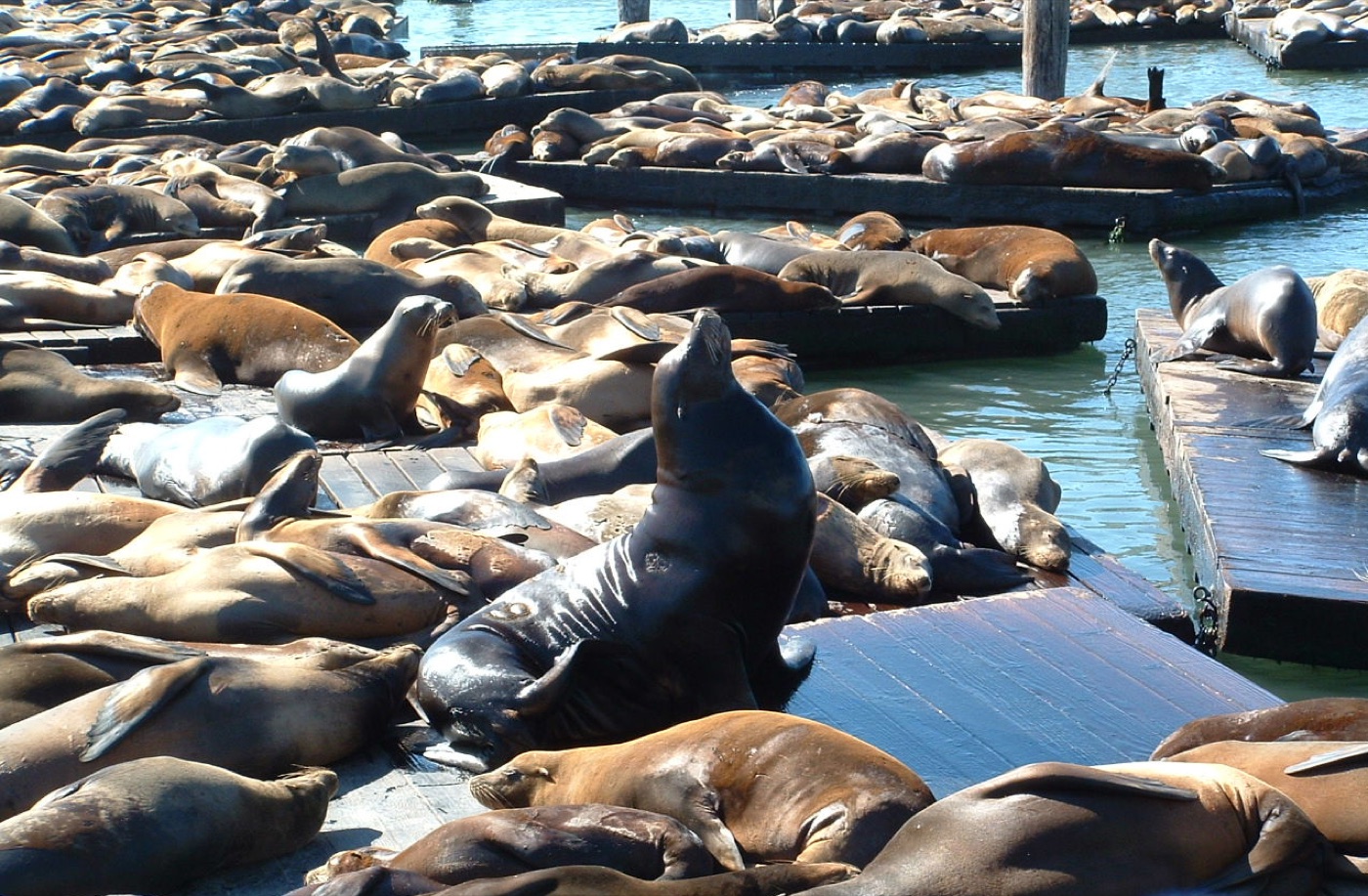
Opportunistic hunters of the California Current
California sea lions are generalist predators that target whatever schooling fish is most abundant. In San Francisco Bay and the adjacent Pacific shelf, that typically means northern anchovy (Engraulis mordax), Pacific sardine (Sardinops sagax), Pacific herring (Clupea pallasii), and depending on the season, Chinook salmon and Pacific rockfish.
A large adult male California sea lion eats 5–8% of its body weight per day — roughly 15–25 kilograms of fish. The K-Dock colony, even at modest counts of 500–800 animals, is consuming thousands of kilograms of fish daily from Bay waters and the nearby Pacific shelf.
How prey drives population swings
The sea lions leave K-Dock when prey concentrations move. Sardine and anchovy populations in the California Current shift dramatically with ocean temperature — El Niño events push warm water north, disrupting upwelling and reducing prey abundance. The near-total colony disappearance in 2009 is widely attributed to one such shift.
Conversely, the 2024 record count above 2,100 animals coincided with an unusually strong upwelling event near the Farallon Islands, which concentrated prey close to the Bay entrance. The sea lions were effectively commuting from K-Dock to a feast 30–50 kilometres offshore.
Dive capacity and foraging range
California sea lions can dive to 300 metres and hold their breath for 10 minutes, though most foraging dives are far shallower. Their typical foraging range from a Bay haul-out like K-Dock extends from the Golden Gate to the Gulf of the Farallones — a corridor where upwelling, submarine canyons, and tidal mixing create some of the most productive fishing grounds on the U.S. West Coast.